Settlement History
Before Waterford: A Changing Landscape During Periods of Colonial Unrest (1751-1783)
Waterford, Loudoun County, Virginia

History of the present-day Waterford area in western Loudoun County during the late colonial period, covering the shift from tobacco to wheat cultivation, the rise of land tenancy, the French and Indian War, and the Revolutionary War.
The area of western Loudoun County underwent a profound economic shift in the late-colonial period, largely abandoning tobacco for profitable wheat commerce. This move encouraged local entrepreneurs to construct numerous flour mills and allowed large estates to shift from plantation slavery to a system of land tenancy, dramatically boosting the area's population. Consequently, the region experienced both a road-building boom and growth of diverse religious groups, developments that coincided with periods of colonial unrest and political upheaval.
Agricultural Shift
During the final years of colonial rule, when the region saw a shift from tobacco cultivation to predominantly wheat cultivation, numerous mills were constructed along streams to grind wheat into flour for shipment, primarily to the British West Indies in the Caribbean. As a consequence of this trade, the agricultural economy of western Loudoun County became deeply connected to the transatlantic slave economy, supplying the necessary food in the form of flour to sustain the labor force that produced the West Indies' lucrative sugar exports.
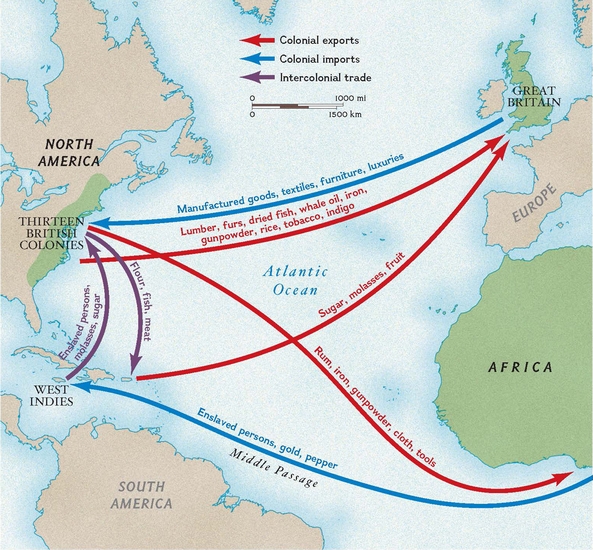
Most of the mills were commercial businesses that purchased wheat from farmers and transported the finished flour in barrels to port towns, primarily Alexandria, for sale to Scottish merchants. Most of the flour was then shipped to West Indies buyers. The men who built these mills were among the more wealthy and influential members of society.1 In 1759, so few Loudoun County farmers were growing tobacco that the Virginia General Assembly enacted a law that it would be acceptable to pay public dues and fees in money instead of tobacco.2
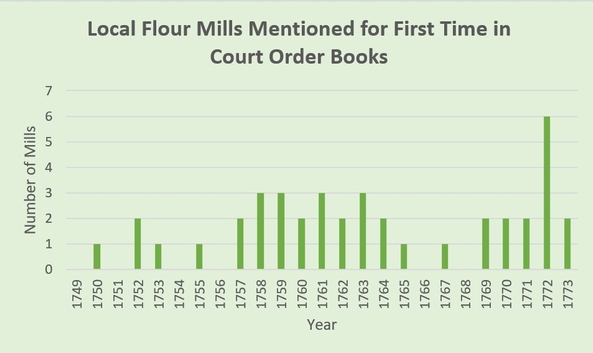
Mahlon Janney, a Quaker who inherited land from his father, Amos Janney, constructed a grist mill and sawmill on Kittoctin Creek ca. 1762 as a business investment. The head race conveyed water for half a mile from the dam, which was built at the southern end of his property, to his mill. In order to have land suitable for the mill, he purchased a 2.7-acre parcel from Francis Hague and built the mill into the hillside. The southern boundary of the mill lot was the tail race.3
Years later, around the time Janney sold the mill, it was described as a two-story mill house with one story of stone and one of wood. The mill measured 36x42 and had three pairs of grinding stones. A one-story wooden sawmill was six feet away and measured 13x42.4 Because the mill had three pairs of grinding stones, the business was likely a commercial enterprise, likely associated with the transatlantic trade.
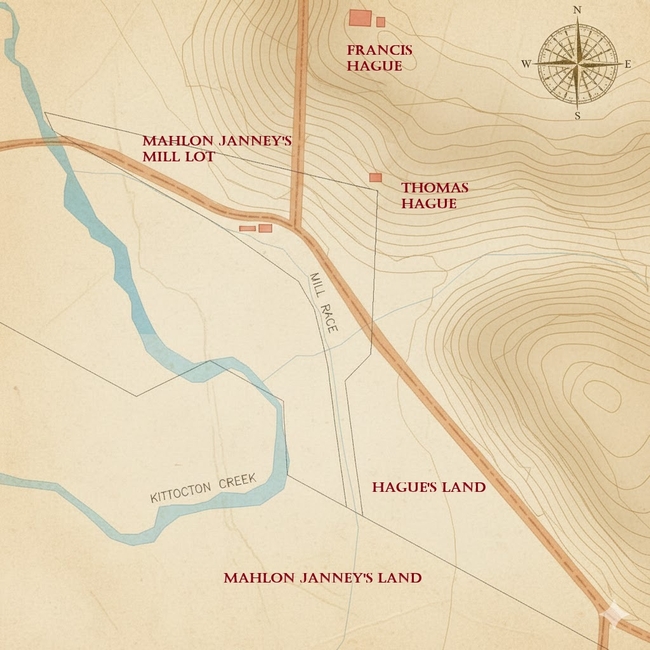
Janney was not a miller himself, but leased the mill and sawmill to others. In 1763 he leased the mills to Thomas Dodd for 50 pounds 8 shillings per year. The venture got off to a rocky start. Janney sued for nonpayment of the rent, but was countersued by Dodd for not upholding his agreement to provide an adequate dam after the dam failed to withstand a flood that destroyed equipment Dodd used to transport timber to the mills.5
A number of other Loudoun County Quakers, members of the Society of Friends, may have participated in the West Indies flour trade, even if indirectly, including John Hough, Joseph Janney, and Isaac Nichols. Even though Quakers didn't own slaves themselves, the flour they sold sustained the plantation system. Reformers like John Woolman began to question the commerce. Woolman, a Quaker from New Jersey, traveled to the southern colonies of Maryland, Virginia, and North Carolina in 1746 and 1757, stopping at the Fairfax meetinghouse each time. On his travels, he saw firsthand the extensive use of slave labor alongside the lifestyle of the enslavers. These trips solidified his antislavery convictions.6 On his trip to the West Indies in 1769, Woolman realized that if the trade stopped, a lot of people would suffer for want of bread. He concluded that a small trade between the Quakers and West Indies was acceptable.7
Methodist leader John Wesley held similar misgivings. He wrote in his 1774 book:
To send provisions to those islands where men are held as cattle, and to grow rich by their miseries, is a departure from the purity of the Gospel.8
Rise in Land Tenancy
Coinciding with the shift from tobacco to wheat cultivation, some absentee landlords moved away from enslaved labor on tobacco plantations to leasing parcels of land to tenant farmers. Adopting a manor system of tenant farms was considered more efficient than managing a distant plantation.9 Tobacco required year-round, labor-intensive work that plantation owners may have felt was more suitable to forced gang labor. Offering long-term leases (three-lives leases) to tenant farmers provided a reliable, steady stream of rental income without the risk of poor crop yields, payment of overseer salaries, and cost of maintaining enslaved laborers.
Four large tracts of land immediately west of present-day Waterford opened up in the 1750s to tenant farmers seeking to lease land. In 1753, William Fairfax conveyed the Piedmont and Shannondale tracts, totaling over 47,000 acres, to his eldest son, George William Fairfax, who began leasing to tenant farmers the following year.10 His leases required the tenant to build a dwelling house at least 20'x16' and to plant an apple orchard.11 The requirement to build a house suggests the parcels were not leased previously. His efforts to lease the land were hampered by his other responsibilities. He served in the House of Burgesses from 1752-1758 and was a Colonel in militia during the French and Indian War. In 1760, he returned to England for a few years to settle his father's estate, but hired John Carlyle of Alexandria to manage his business affairs.
In 1756, John Tayloe subdivided his extensive land tract, situated between the Piedmont and Shannondale tracts, into tenant farms.12 Previously, Tayloe's operations in 1749 were documented in Cameron Parish as including a slave quarter that housed eight enslaved laborers and was managed by a Catholic (Papist) overseer named Ferdinand O'Neil.13 This shift from direct cultivation to a tenancy system mirrored the contemporary trend among absentee landowners to convert their tobacco plantations into tenant properties.

The population growth in the region was sufficient to warrant the creation of a new county. Petitioners lobbied the Virginia General Assembly for a more convenient court.14
In 1757, the Virginia House of Burgesses approved the petition for a new county, thereby establishing Loudoun County. The county was presumably named in honor of John Campbell, the Fourth Earl of Loudoun, since at the time of the county's creation during the French and Indian War, Campbell held the prominent positions of Titular Governor of Virginia (1756-1759) and Commander-in-Chief of all British forces in North America.15
The Earl of Tankerville, an English lord living in Great Britain, owned an extensive tract that stretched from the Potomac River to just below Vestals Gap Road south of present-day Waterford. His agent subdivided and leased tenant farms beginning in 1760.16 Tankerville inherited the land from John Colville who was apparently operating a plantation on the tract prior to his death in 1756. Colville's will bequeathed the land Together with all the Negroes, And Stock of Horses, Cattle, Hoggs, &c that should be thereon. The terms of the will stipulated that the enslaved laborers be kept on the plantation for a term of three years and that the funds generated be applied to pay Colville's debts.17
In 1759, Tankerville employed James Patterson as his land agent. Patterson was to travel from England to Virginia where he would reside and look after the Earl's business interests. Patterson was empowered to lease any part of the Catacton Tract to anyone who is able to pay the rent for a term of years, and to enter into any lease or contract in the Earl's name.18 The tract of tenant farms was set up using the English Manor system. In addition to having to build a 26'x20' dwelling using square logs, tenants were required to construct a 36'x22' barn or granary. The lease prohibited the farmer from growing tobacco without Tankerville's approval and required him to be a customer of any water suit mill (an old English term for a grist mill that the lord of the manor forced his tenants to use), saw mill, bolting mill, or fulling mill if the Earl's mill was located within five miles of the tenant's dwelling and offered competitive prices.19 It is unknown if Tankerville's agent ever built any mills, though he did have land reserved on the main road to Vestal's Gap that was known as Patterson's Reserve.20
Coinciding with the increase in the number of tenant farms to the west of present-day Waterford, tracts of land to the east and southeast were sold rather than leased. Not everyone was a farmer. Two tradesmen resided on land southeast of present-day Waterford: John Griffith a blacksmith, and James Kennedy, a weaver.21
The Road-Building Boom
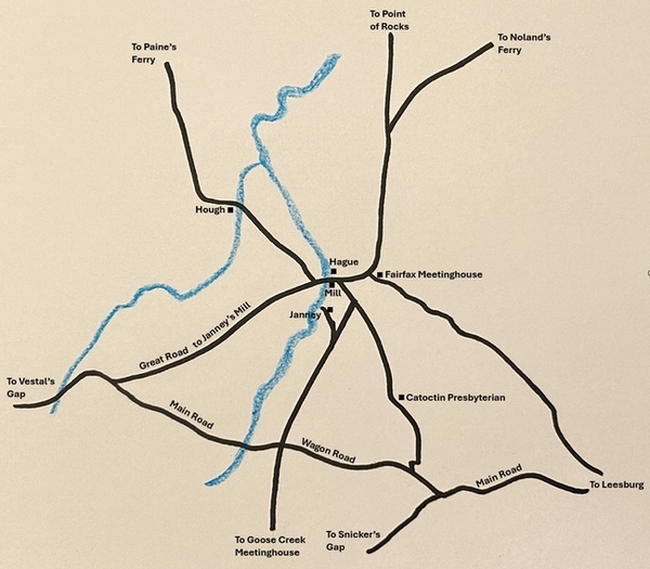
As the number of wheat farmers increased, more roads were needed to transport grain to the mills and flour to the port towns. The Virginia General Assembly enacted a law that allowed inhabitants to petition the county court for public roads, provided the road went to a courthouse, parish-church, mill, or ferry.22 After Janney built his mill, petitions were filed with the county court for roads to his mill.
- In 1763, petition by Thomas Dodd for a road from Thomas Dodd's mill to Mahlon Janney's mill.23
- In 1764, a new road was viewed from Abel Janney's to Mahlon Janney's mill.24
- In 1768, Edward Wyatt petitioned to modify the Great Road formerly laid out from Pain's Ferry to Mahlon Janney's mill.25
- In 1769, from Mahlon Janney's mill to Goose Creek Meeting House and thence to Nichol's mill.26
- In 1772, petition for a road from Noland's Ferry to Mahlon Janney's mill.27
- In 1773, a new road was viewed from Mahlon Janney's mill to the Main Road by Nathan Spencer's.28
- In 1774, inhabitants petitioned for a road from their settlement to Mahlon Janney's mill. The petitioner, William Cavins, lived northeast of present-day Waterford.29
French and Indian War (1754-1763)
After decades of relative peace, the area was drawn into the conflict between Great Britain and France over who controlled the land west of the Appalachian Mountains, especially the Ohio River Valley. The war had an economic impact on the region. In March 1755, Robert Dinwiddie, Lieutenant Governor of Virginia, issued a proclamation prohibiting the export of grain, flour, and other provisions to prevent supplying the French and to reserve provisions for British troops.30 In May 1757, members of the House of Burgesses motioned to request that the Governor lift the embargo, arguing that excess grain that the Virginia Colony grew would parish, that the only way to gain credit in Great-Britain was to export tobacco, and that the people of Virginia had been rendered incapable of paying their taxes. Dinwiddie lifted the embargo thereafter.31
British officer Sir Peter Halkett and six companies of the 44th Regiment left Alexandria for Winchester in April 1755 in support of General Braddock's expedition into Ohio Country to capture Fort Duquesne.32 They marched up present-day Route 9 and encamped one night at Edward Thompson's, near Hillsboro.33 After Braddock's disastrous defeat, men of the local militia were called out to defend the frontier. In October, it was ordered that six private men be drafted from each troop in Fairfax County. (Loudoun County had not been established yet.) The men formed into one company to march to Winchester for one month of duty, at which time it was expected that a Virginia Regiment would have been formed. They were stationed in Winchester by George William Fairfax, Colonel of Frederick County, and when relief didn't arrive, were ordered to remain longer. However, numerous men left despite orders after their one month of service was complete. Among them was Daniel Shoemaker, Simon Shoemaker, Joseph Burton, and Joseph Martin who would all one day hold leases on George William Fairfax's Loudoun lands.34
Quaker men were in a difficult position due to religious tenets against participating in war. Quakers believed that disputes should not be solved with violence; that killing was contrary to the Gospel. In 1755, the Virginia General Assembly passed an Act for raising funds for the protection of the frontier, to encourage men to enlist, and to provide for a draft if local militias were unable to enlist enough single men.35 Quaker men refused to be soldiers or pay funds and fines. However, John Williams and John Hough had horses impressed for military use.36

At some time around 1758, Loudoun County sent a draft of the militia to Fort Loudoun in Winchester where George Washington maintained his headquarters.37 There were no reports of Loudoun Quaker men being drafted. Any negative consequences for Quakers who worshipped at the Fairfax Meetinghouse stemmed entirely from their own actions. In 1756, Joseph Janney informed the Quaker meeting that he felt remorse for wagoning for soldiers, recognizing that the "somewhat military manner" of the work was contrary to Quaker principles.38 The following year, Abraham and Edward Tanzey enlisted as soldiers, abandoning the Principles of Friends, resulting in a Testimony written against them.39
Early Abolition Movement
The French and Indian War directly led to the Society of Friends banning slavery among its members. Previous to the outbreak of the war, Quakers were encouraged to treat enslaved people well or to free them, but it was a suggestion not a prohibition. In 1758, the Society of Friends began prohibiting its members from enslaving people. The war forced Quakers to confront their core belief in pacifism. Quaker abolitionists argued that engaging in the violence of war and benefiting from the violence of slavery were both inconsistent with Christian principles. If the Society was going to withdraw from politics over war, it had to simultaneously cleanse itself of the sin of slavery. At a regional meeting of Quakers in Pennsylvania, members reflected on the capture and enslavement of some Quaker pioneers by indigenous people, which resulted in adherence to the precept, To do unto others as we would they should do unto us.40
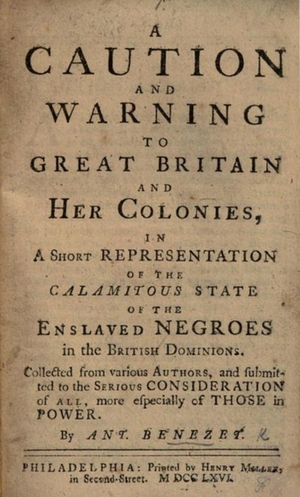
In 1767, Quakers at the Fairfax Meetinghouse, located near present-day Waterford, noted in their minutes that they received 18 small books entitled A Caution to Great Brittain and her Colonys Respecting the Enslaving Negroes which were to be disbursed and circulated among the Friends.41 The book, written by Quaker abolitionist Anthony Benezet, fervently critiqued the slave trade by detailing the cruelty suffered during capture in Africa, the brutal transportation across the ocean, and of hardships on plantations. Benezet argued that no person has a right to possess another's liberty or make them a salable commodity. He also argued that slavery leads to the moral decay of all society and introduces idleness. The book, one of the most influential anti-slavery tracts written, was a plea to government and civic leaders to end slavery. It helped lay the foundation for the abolition movement.42
Quakers who attended the Fairfax Meeting began freeing people they enslaved and encouraging other members to do likewise. They took care to obtain manumissions for slaves who were released within their jurisdiction so the documents could be recorded in their records. A manumission agreement listed the terms under which enslaved people would be free. They could not be legally recorded at the county court since enslaved people could only be freed through a petition to the Virginia General Assembly. Area Quakers were concerned about an agreement entered into by the family of Francis Pierpoint, who would be one of the first residents in the village of Waterford. They wanted the enslaved person freed sooner than the manumission allowed.43
In 1780, Quakers in Virginia submitted a petition to the Virginia House of Delegates for an act to allow manumissions by will or deed, describing their members attempts and failures to free their enslaved people.
...freedom is the natural rights of all mankind, they some time since prohibited their members from purchasing slaves; that many of their members, setting upon this principle, had by will, directed the manumission of their slaves, under such restrictions as might prevent public inconvenience, but that such manumissions wanting the sanction of law, have been generally defeated by executors and others; and praying that the members of that persuasion, or of any other, may be legally authorized to manumit their slaves in such manner as will prevent injury to the community.44
Following lobbying by Quakers and other religious groups, the Virginia General Assembly passed "An act to authorize the manumission of slaves." The law stipulated that any person disposed to emancipate their slaves were permitted to do so, provided that the former enslaver or his heirs support anyone who is not of sound mind, over the age of 45 years, males younger than 21 years and females younger than 18 years.45 To free a young person whom the former enslaver was obligated to support, Quakers often arranged an apprenticeship agreement until the individual reached the age of majority. This strategy allowed them to emancipate those who could not yet provide for themselves without placing a financial burden on the local parish.
Rise in Religious Diversity
Prior to the French and Indian War, two non-Anglican religious groups had a presence in the area: the Quakers and Baptists. The Quakers were among the earliest non-Anglican settlers, establishing their presence by 1733. Their community was anchored by the construction of a new meetinghouse in 1755 on the land of Mahlon Janney, which served as both a spiritual and social hub.46 Their pacifist stance and anti-slavery views made them distinct from the English gentry who dominated Eastern Loudoun. Baptists formally established the Ketocton Baptist church in 1751, marking the beginning of an organized Regular Baptist presence in the region.47
The period after the French and Indian War was a transformative era for Western Loudoun County's religious landscape, moving from a government-sanctioned Anglican establishment to a diverse community that benefited from growing religious tolerance. This shift was directly influenced by both local evangelical fervor and the political upheaval of the American Revolution. Itinerant preachers, who entered the area after the French and Indian War to preach to the rapidly growing population of tenant farmers, were successful in growing Protestant congregations.
The Baptists were a powerful force in the evangelical movement that swept through Virginia. New Valley Baptists emerged around 1763 with the arrival of William Lewis from Pennsylvania. Led by itinerant preacher Rev. Joseph Thomas, the congregation rapidly grew, with a 26x20 meeting house built in 1768 to accommodate approximately 90 families.48 Their success demonstrated the spiritual hunger of the common people for evangelical preaching. In the area known as the "German Settlement" (around modern-day Lovettsville), two German denominations established churches. New Jerusalem Evangelical Lutheran Church was organized ca. 1765 and the German Reformed congregation, which later became St. James United Church of Christ, organized ca. 1773. These congregations often served as anchors for the German community, providing both religious and cultural continuity in their native language. Presbyterians also had a presence, marked by a commitment to Calvinist doctrine and orderly governance. The Trustees of Catoctin Presbyterian formally secured land for a meeting house in 1769, demonstrating their intention to establish a permanent presence, primarily relying on itinerant, evangelical preachers.49
The single most significant event that affected the religious community during this period was the move toward disestablishment of the Anglican Church, driven by the colonists' fight for independence. At the 1769 session of the Virginia House of Burgesses, the Anglican-dominated Assembly proposed a Bill of Toleration designed to manage and control the rapidly growing population of dissenters. The explosive growth of preaching by evangelical groups like the Baptists was seen as disorderly and disruptive. The proposed bill aimed to legalize dissenting worship but only under strict government controls, such as licensing their preachers and limiting meeting locations while still requiring dissenters to pay taxes to support the established Anglican Church.
The Quakers at the Fairfax Meetinghouse were opposed to the bill and drew up an essay to be submitted at the next session. While the bill mentioned some ease from the Church of England, the Quakers wrote that several Paragraphs we apprehend, if confirmed by a Law, will subject our Society living in this Colony to great Difficulty in several Respects.50 Dissenting congregations petitioned for the elimination of the tax to support the Anglican Church and for the right to worship without state interference. They believed that conscience was a matter between a person and God, not subject to civil authority. Since Quakers did not have paid, ordained ministers and believed any member may be moved by the Spirit to speak, they felt that licensing a specific preacher would contradict this belief in the "Inner Light." They also opposed licensing meeting houses since they had a long-held practice of worshiping in private homes.
The dissenting congregations were ultimately successful. In October 1776, the Assembly passed the Act of Exempting Dissenters that eliminated the tax, largely due to the political pressure created by the Revolution and the need for dissenter support.51 This was a watershed moment for dissenters (Baptists, Presbyterians, Quakers, and Lutherans). It removed the long-standing financial burden and religious grievance, allowing these churches to fully fund and sustain their own ministries without having a legal requirement to support another religious establishment.
Revolutionary War
Military Service
On August 12, 1776, the Declaration of Independence was read on the steps of the Loudoun County Courthouse in Leesburg.52 Numerous young men enlisted to join the fight for freedom, exclusive of most Quakers who endured hardships due to their commitment to pacifism.
Quaker faith strictly required members to remain neutral and abstain from all forms of military participation or support of the conflict. This religious mandate resulted in members refusing to bear arms or serve in the militia, pay war taxes or fines levied in lieu of military service, and take oaths of allegiance to the new government. To maintain the integrity of their religious principles, the Society of Friends enforced a rigorous internal system of discipline. If a Quaker violated the pacifist code, for example, by enlisting or paying a war fine, a committee of their local Meeting would meet with the individual. The purpose of this meeting was to counsel the member regarding the transgression and encourage a return to the Society's principles. If the member refused to repent and renounce the action, they faced possible expulsion from the society. In August 1776, the same month the Declaration of Independence was read at the Courthouse, a complaint was brought in Fairfax Meeting against William Richardson for bearing arms and enlisting as a soldier.53 A testimony was written against him and he was thereafter denied membership.54 Richardson may have enlisted with Samuel Griffith's company, which likely formed across the Potomac River in present-day Montgomery County, Maryland.55 After the war, Richardson inherited a lot in Waterford.56

In 1777, Virginia passed an act that compelled men between the ages of 16 and 50 to register for the militia and attend local musters ten months of each year. Failure to enroll or attend a muster resulted in a fine, typically of five shillings for each missed muster.57 As the war progressed and voluntary enlistments to the army were insufficient, Virginia resorted to conscription for its soldiers. Each county was given a quota to fill. Loudoun's was 68 men. If the quota couldn't be met by volunteers, the law required a draft lottery of single men of at least 18 years with no children. Men who were drafted could legally pay for a substitute.58 Failure to pay for a substitute resulted in large fines. Numerous fines were levied against Quakers in Loudoun County court in April 1781, each valued at 100 pounds, for failing to perform military service as required by Virginia law during the Revolutionary War. One of the Quakers who was fined was Mahlon Janney, a key figure in the early 19th-century expansion of the Town of Waterford.59
General George Washington, desperately needing troops, expressed his displeasure over the Quakers' refusal to enlist in a letter to William Livingston, writing I have been informed by Colo. Forman that the Quakers and disaffected are doing all in their power to counteract your late Militia law, but I hope if your Officers are active and spirited that they will defeat their evil intentions and bring their Men into the Field.60
To fund the war, Virginia borrowed money, instituted taxes, issued paper money, and sequestered British-owned property. A series of Acts in 1781-1782 provided a tax system based on land, slaves, personal property, and a poll tax on free white males.61 These taxes were essential for meeting the funding requests made by the Continental Congress and for covering the expenses of the Virginia Continental Line and the State Militia.
Quakers considered payment of these wartime taxes as supporting the war. With muster fines, substitution fees and taxes unpaid, the sherif was authorized to collect the value of the funds by seizure and sale of the delinquent's goods. For Quakers and other pacifists, this cycle was continuous: they refused to muster due to conscience, they were fined for delinquency, and their property was seized and sold to pay the fine, which then funded the military.
Provisions
In October 1777, George Washington was desperate for supplies while engaged in the Philadelphia Campaign. Washington authorized Brigadier General David Forman to appoint such, and so many persons as you shall see fit to collect for the use of the Continental Army all such Blankets, Shoes, Stockings & other Articles of Cloathing as can possibly be spared from the Inhabitants in Jersey, giving receipts therefor, to be paid by the Clothier General. Obtaining these things from the Quakers & disaffected Inhabitants is recommended, but at all events to get them.62
Virginia followed suit and seized provisions and hard currency from the Quakers in Loudoun County. The sheriff and his deputies went to Quaker homesteads and seized a wide variety of personal possessions in payment of fines and taxes. These included cash on hand, horses, cows, hats and coats, tin and pewter plates, cups, and spoons, cloth and yarn, one man's new buckskin breeches, feather beds, and even a bible. James Nickols had a servant woman taken who had 17 months left to serve. Only one Quaker, miller Israel Janney, had flour seized. Quakers itemized their losses and submitted the list to the Philadelphia Meeting of Suffering in order to maintain a record of their testimony by suffering.63
A major effort to obtain provisions in Loudoun County took place in 1781, a pivotal year when troops were amassing in southeastern Virginia, particularly near Fredericksburg and Yorktown. Washington sent the Marquis de LaFayette south to Virginia in March 1781 with 1,200 troops primarily to combat the destructive raids being conducted by American traitor, Benedict Arnold, who was then a Brigadier General in the British army. LaFayette also protected supply depots where quartermasters collected and dispersed provisions. In June 1781, Washington ordered General Anthony Wayne to march the Pennsylvania Line consisting of 800 to 1,000 men through Virginia to reinforce Lafayette. General Wayne passed through Leesburg in June 1781. The joining of forces was the precursor to the siege at Yorktown. This increased the need for even more provisions.
The most heavily impressed items from Loudoun County were live beef, a critical and safe food resource to transport to the Continental Army. The cattle were temporarily pastured locally, but were soon driven south by local drovers for four days until they reached camp.64 Based on the travel time, camp may have been the quartermaster's camp at Fredericksburg, and a likely route have been on the Carolina Road. Loudoun County beef supported both Lafayette's defensive raids against Benedict Arnold and the Yorktown siege that led to the British surrender.
The Virginia General Assembly passed acts that established a formal process for reimbursing inhabitants for war provisions that were impressed. For the requisitioned items, the commissioners were required to issue certificates to the individual owners that documented the item taken and the estimated value.65 Certificates, and any other documentation proving the provisions taken for the war effort, were submitted to the Loudoun County Court.66 Many men, including Quakers who would one day live or work in Waterford, had provisions seized. Among them was Isaac Walker, John Williams, Israel Thompson, Andrew Brown, Joseph Scott, Joseph Janney, and Mahlon Janney.67

Oath of Loyalty
George Washington harbored suspicion toward the pacifist Quakers, a sentiment clearly articulated in his March 1778 letter to Brigadier General John Lacey.68 Concerned that their upcoming religious assembly would be used to develop plans incompatible with his war goals, Washington instructed Lacey to disrupt the travel of Quakers heading to the meeting. His specific order recommended intercepting these travelers and impressing their horses for the use of the Light Dragoons. The gathering Washington sought to prevent was the General Spring Meeting of Ministers and Elders for Pennsylvania and New Jersey. Despite the risks associated with such travel, Quakers from Loudoun County, including future Waterford area leaders Mahlon Janney, James Steer, Joseph Janney, and John Hough, nonetheless risked the journey to attend the Philadelphia Yearly Meeting later that year, in September 1778.69
Washington's suspicions may have been further aroused by a letter he received from his stepson, John Parke Custis, who informed him that a number of Quakers in Loudoun County, Hough among them, were said to be in communication with the British.70 The Hough he mentioned may have been John Hough, a prominent Quaker who traveled to Philadelphia for the Yearly Meetings. Hough lived near present-day Waterford. The Philadelphia Meeting of Quakers, to which the Loudoun Quakers reported, did, in fact, continue their correspondence with the London Quaker Meetings, but it appears the correspondence included their testimony of sufferings.71
The newly formed Commonwealth of Virginia required residents to demonstrate loyalty to the American cause. In 1777, the Virginia General Assembly passed An Act to oblige the free male inhabitants of this state above a certain age to give assurance of allegiance to the same and for other purposes. The act required all free-born male inhabitants of the Commonwealth, aged sixteen and older (excluding imported servants), to appear before a justice of the peace to take and subscribe to an oath of allegiance to the Commonwealth of Virginia.72
Since Quakers refuse to swear oaths, the law was structured to allow them to simply affirm their allegiance. However, the Quaker Society of Friends explicitly forbade its members from taking any action that could be construed as support for the war. When a Quaker was reported to have taken the affirmation, a committee from their local Monthly Meeting would meet with the individual. They would be admonished and urged to repent and renounce the affirmation. If the individual refused to condemn their action, choosing patriotism over their faith's peace principles, they faced expulsion from the Quaker community. In 1781, Israel Thompson and John Hough Jr. both condemned their affirmation of allegiance in letters recorded in the Fairfax Quaker Meeting Minutes.73 [Israel Thompson would own a few lots in Waterford after the war and John Hough Jr's widow, Lydia, would one day live in Waterford.74
In the final year of the war, Joseph Janney purchased a 12-acre parcel from Thomas Hague, a transaction that laid the groundwork for the founding of Waterford.
Author's notes:
- Contrary to published histories, there is no primary-source evidence that Amos Janney owned a mill. Grist mills were typically constructed in this area after Janney's death when farmers switched to growing wheat. Additionally, roads weren't petitioned for the area until after Mahlon Janney constructed his mill.
- No village existed at present-day Waterford during the Revolutionary War. There is no evidence that there was a village of Janney's Mill prior to the foundation of Waterford. Any early road names that mentioned Janney's mill referred to the mill itself, as required by the road act.
- Lastly, it does not appear that Loudoun County was the "Breadbasket of the Revolution." This oft-repeated colonial-revival marketing phrase became popular in many locations with the rise of historical tourism. Based on the number of cows that were impressed, shall we have some fun and go with "Beef Larder of the Revolution?"
Thumbnail and Facebook post image, "Going to Meeting 1776," courtesy Library of Congress.
Footnotes
-
Fairfax County Court Order Books (1749-1751, 1752-1754, 1754-1756, 1756-1763), Loudoun County Court Order Book A, 1757-1762, 1762-1765 ↩
-
Henings Statutes, "An Act to enable the Inhabitants of the County of Loudoun to pay their public Dues and Officers fees in Money, and for other purposes therein mentioned." Volume vii, p. 292, February 1759. ↩
-
Deed from Francis Hague to Mahlon Janney, Loudoun County Deed Book C:367, June 14, 1762. ↩
-
Jonas Pott's Mutual Assurance Declaration, 1803, Mutual Assurance Society of Virginia. General Business Records, 1795-1965. Accession 28135, Business Records Collection, The Library of Virginia, Richmond, Virginia. ↩
-
Loudoun County Circuit Court Judgments, Mahlon Janney vs. William Dodd 1764-1766_54 and William Dodd vs. Mahlon Janney 1765-1766_54. ↩
-
Woolman, J., A Journal of the Life and Travels of John Woolman: In the Service of the Gospel, Printed at the Schools of Industry, 1838, as viewed at https://books.google.com/books?id=0soYAAAAYAAJ ↩
-
Ibid, p. 238. ↩
-
Wesley, J., Thoughts Upon Slavery, R. Hawes, 1774, as viewed at https://books.google.com/books?id=asQLhrGAd_MC ↩
-
Washington, George. George Washington Papers, Series 2, Letterbooks 1754 to 1799: Letterbook 18, Sept. 9, 1791. September 9, 1791, 1791. Manuscript/Mixed Material. Retrieved from the Library of Congress, www.loc.gov/item/mgw2.018/. ↩
-
Deed from William Fairfax to George William Fairfax, Fairfax County Deed Index, Deed C:440 is listed as missing. ↩
-
Lease from George William Fairfax to John Hough, Fairfax County Deed Book D:104, June 18, 1755; Lease from George William Fairfax to Samuel Smith, Fairfax County Deed Book D:189, December 9, 1755, and others. ↩
-
Survey plat of John Tayloe's tenant farms, Fairfax County Deed Book D:288. ↩
-
Green, Charles Rev., Fairfax County List of Tithables, Charles Green Papers, Manuscript Division, Library of Congress, 1749, obtained from Library of Congress by Linda Stokesbury Brennon 17 Jul 2018. ↩
-
Journal of the House of Burgesses, Petition from sundry Back Inhabitants of the said County of Fairfax praying the same may be divided into two distinct counties, April 22, 1757, p. 432, as viewed on Google Books ↩
-
William Waller Hening, ed., The Statutes at Large; Being a Collection of All the Laws of Virginia from the First Session of the Legislature, in the Year 1619, vol. 7 (Richmond: Printed for the editor, 1820), p. 148, Internet Archive, https://archive.org/details/statutesatlargeb07virg. ↩
-
Earl of Tankerville to William Grant, June 24, 1860, Loudoun County Deed Book B:342. ↩
-
Power of Attorney from Earl of Tankerville to James Patterson, March 5, 1759, Loudoun County Deed Book C:98. ↩
-
Power of Attorney from Earl of Tankerville to James Patterson, March 5, 1759, Loudoun County Deed Book C:98. ↩
-
Lease from Earl of Tankerville to Samuel Coombs, June 24, 1760, Loudoun County Deed Book B:346 (and many more leases from Tankerville that contain common lease terms.) ↩
-
Loudoun County Deed Book S:245. ↩
-
Loudoun County Deed Books C:635 and K:175. ↩
-
"An Act for making, repairing and amending the Public Roads, and for laying out and clearing new Roads," William Waller Hening, The Statutes at Large; Being a Collection of All the Laws of Virginia, from the First Session of the Legislature, in the Year 1619 (Richmond and Philadelphia, 1809-1823), Volume 6, 1748. ↩
-
Fairfax County Court Order Book B, May 11, 1763, p. 124. ↩
-
Abel Janney's to Mahlon Janney's mill, Road Report, Loudoun County Circuit Court Archives, RR1764-002-510. ↩
-
Edward Wyatt petition for road change from Pain's Ferry to Mahlon Janney's mill, Road Petition, Loudoun County Circuit Court Archives, RP1768-001-11. ↩
-
Road petition from Mahlon Janney's Mill to Goose Creek Meeting house, Loudoun County Court Order Book D, August 14, 1769, p. 247. ↩
-
Road petition from Noland's Ferry to Mahlon Janney's mill, Loudoun County Court Order Book E, June 23, 1772, p. 342. ↩
-
Road from Mahlon Janney's Mill to the Main Road, Road Report, Loudoun County Circuit Court Archives, RR1773-003-547. ↩
-
Cavins, William and others, Petition for Road from Mahlon Janney's Mill Through Our Settlement, Road Petition, Loudoun County Circuit Court Archives, RP1774-002-34. ↩
-
Virginia. Lieutenant Governor (1751-1758: Dinwiddie), "A Proclamation, To prohibit the Exportation of Provisions," March 6, 1755, published in Virginia Gazette (Williamsburg), March 14, 1755, 3, accessed via Virginia Chronicle (Library of Virginia). ↩
-
H. R. McIlwaine, ed., Journals of the House of Burgesses of Virginia, 1752-1755, 1756-1758, vol. 8 (Richmond, VA: The Colonial Press, 1909), p. 448. ↩
-
Netherton, Ross de Witt. Braddock's Campaign and the Potomac Route to the West. Winchester-Frederick County Historical Society Journal 1 (1989), p. 9. ↩
-
Williams, Harrison. Legends of Loudoun: An Account of the History and Homes of a Border County of Virginia's Northern Neck. Richmond, VA: Garrett and Massie, 1938, p. 84. ↩
-
H. R. McIlwaine, ed., Journals of the House of Burgesses of Virginia, 1752-1755, 1756-1758, vol. 8 (Richmond, VA: The Colonial Press, 1909), p. 374, FamilySearch ↩
-
"An Act for raising the sum of forty thousand pounds, for the protection of his majesty's subjects on the frontiers of this colony," (29 August 1755) in William Waller Hening, The Statutes at Large... (Richmond: Printed for the Editor, 1819), Vol. 6, p. 527. ↩
-
H. R. McIlwaine, ed., Journals of the House of Burgesses of Virginia, 1752-1755, 1756-1758, vol. 8 (Richmond, VA: The Colonial Press, 1909), p. 375, FamilySearch ↩
-
Loudoun County Minute Book A, p. 133, as viewed in Patricia B. Duncan, comp. Loudoun County Virginia Order Books A 1757-1786 Book B, Electronic Edition (Westminster, MD Heritage Books; 2007). ↩
-
Fairfax Monthly Meeting, Virginia. Minute Book, 1746-1776. Records of the U.S. Quaker Meetings. Digital images. U.S., Quaker Meeting Records, 1681-1935. Provo, UT, USA: Ancestry.com Operations, Inc., 2014, Image 80 of 508. https://www.ancestry.com. ↩
-
Ibid. Image 89 of 508. ↩
-
Ancestry.com. U.S., Quaker Meeting Records, 1681-1935 [database on-line]. Provo, UT, USA: Ancestry.com Operations, Inc., 2014. Source material: Swarthmore, Quaker Meeting Records. Friends Historical Library, Swarthmore College, Swarthmore, Pennsylvania. Philadelphia Yearly Meeting, 1758. ↩
-
Minutes of the Fairfax Monthly Meeting, 1746-1776, Loudoun County, Virginia; digital image, U.S., Quaker Meeting Records, 1681-1935, Ancestry.com (http://www.ancestry.com). p. 259. ↩
-
Benezet, Anthony. A Caution and Warning to Great Britain, and Her Colonies, in a Short Representation of the Calamitous State of the Enslaved Negroes in the British Dominions. Henry Miller, 1766. As viewed on Google Books. ↩
-
U.S., Quaker Meeting Records, 1681-1935 (database on-line), Fairfax Monthly Meeting, Minutes, 1776-1802; entry for Francis Pierpoint, Image 69 of 732, July 1778, citing original records on ancestry.com ↩
-
Virginia. General Assembly. House of Delegates. Journal of the House of Delegates of the Commonwealth of Virginia. Commonwealth of Virginia, 1776. University of Pittsburgh Library System, university_pittsburgh, p. 32. ↩
-
William Waller Hening, ed., The Statutes at Large; Being a Collection of All the Laws of Virginia from the First Session of the Legislature, in the Year 1619 (Richmond: J. & G. Cochran, 1821), Volume 11, pages 39-40. ↩
-
Mahlon Janney conveyed 10 acres to trustees of the Fairfax Meeting, Fairfax County Deed Book D1(4)134, March 5, 1755. ↩
-
Robert Baylor Semple, A History of the Rise and Progress of the Baptists in Virginia (1810; repr., Richmond: Pitt & Dickinson, 1894), 162. ↩
-
Robert Baylor Semple, A History of the Rise and Progress of the Baptists in Virginia (1810; repr., Richmond: Pitt & Dickinson, 1894), 396. ↩
-
James Cavins conveyed land to Trustees of Presbyterian church, Loudoun County Deed Book G:104, April 7, 1769. ↩
-
Fairfax Monthly Meeting, Virginia. Minute Book, 1746-1776. Records of the U.S. Quaker Meetings. Digital images. U.S., Quaker Meeting Records, 1681-1935. Provo, UT, USA: Ancestry.com Operations, Inc., 2014, Image 355 of 508. https://www.ancestry.com. ↩
-
William Waller Hening, ed., The Statutes at Large; Being a Collection of All the Laws of Virginia, from the First Session of the Legislature, in the Year 1619 (Richmond: J. & G. Cochran, 1821), 9:164-66. ↩
-
1773-1780 Rough Minute Book entry on America's Independence, August 14, 1776, page 65, as viewed at https://www.loudoun.gov/6112/Resolutions-to-Declarations ↩
-
Fairfax Monthly Meeting (Loudoun County, Virginia) Minutes, 1776-1802, image 8 or 732, entry for William Richardson, re: bearing Arms, August 1776, imaged in U.S., Quaker Meeting Records, 1681-1935, database with images, Ancestry (https://www.ancestry.com) ↩
-
Fairfax Monthly Meeting (Loudoun County, Virginia) Minutes, 1776-1802, image 11 or 732, entry for William Richardson, re: bearing Arms, August 1776, imaged in U.S., Quaker Meeting Records, 1681-1935, database with images, Ancestry (https://www.ancestry.com) ↩
-
William Richardson Service Record, Third Regiment, Maryland, Compiled Service Records of Soldiers Who Served in the American Army During the Revolutionary War, compiled 1894 - ca. 1912, documenting the period 1775-1784, publication M881, National Archives, as viewed at www.fold3.com ↩
-
Will of Richard Richardson, Frederick County Maryland Will Book p. 504, July 20, 1802. ↩
-
Virginia General Assembly, An act for regulating and disciplining the Militia, passed on May 5, 1777, William Waller Hening, ed., The Statutes at Large; Being a Collection of All the Laws of Virginia from the First Session of the Legislature in the Year 1619 (Richmond: J. & G. Cochran, 1821), 9:267-274. ↩
-
General Assembly. "An Act for speedily recruiting the Virginia Regiments on the continental establishment, and for raising additional troops of Volunteers (May 20, 1777)" Encyclopedia Virginia. Virginia Humanities, (07 Dec. 2020). Web. 08 Nov. 2025. ↩
-
Loudoun County Court Order Book G, page 348. ↩
-
George Washington to William Livingston, 11 May 1777, Founders Online, National Archives, https://founders.archives.gov/documents/Washington/03-09-02-0383. [Original source: The Papers of George Washington, Revolutionary War Series, vol. 9, 28 March 1777 — 10 June 1777, ed. Philander D. Chase. Charlottesville: University Press of Virginia, 1999, pp. 387-388.] ↩
-
Hening, William Waller, editor. "An Act for Raising a Supply of Money for Publick Exigencies." The Statutes at Large; Being a Collection of All the Laws of Virginia, from the First Session of the Legislature, in the Year 1619. Vol. 9, Samuel Pleasants, 1821, pp. 349-68. ↩
-
George Washington to Brigadier General David Forman, 6 October 1777, Founders Online, National Archives, https://founders.archives.gov/documents/Washington/03-11-02-0428. [Original source: The Papers of George Washington, Revolutionary War Series, vol. 11, 19 August 1777 — 25 October 1777, ed. Philander D. Chase and Edward G. Lengel. Charlottesville: University Press of Virginia, 2001, pp. 407-408.] ↩
-
Philadelphia Yearly Meeting, Book of Sufferings, 1776-1792, "An Account of Friends Sufferings in Loudoun County," U.S. Quaker Meeting Records, 1681-1935 (Ancestry.com Image 148 of 484). ↩
-
Public Service Claims, "Loudoun, Virginia, United States records," images, FamilySearch (https://www.familysearch.org/ark:/61903/3:1:3Q9M-C379-WHYT?view=explore : Nov 15, 2025), image 3 of 60. Image Group Number: 008570993 ↩
-
Act of the Virginia General Assembly, "An Act for Adjusting Claims for Property Impressed or Taken for Public Service," May 1780, in William Waller Hening, The Statutes at Large; Being a Collection of All the Laws of Virginia, from the First Session, in the Year 1619 (Richmond: Samuel Pleasants, Jr., 1821), 10:288-293. ↩
-
Public Service Claims, "Loudoun, Virginia, United States records," images, FamilySearch (https://www.familysearch.org/ark:/61903/3:1:3Q9M-C379-WHYT?view=explore : Nov 15, 2025), image 3 of 60. Image Group Number: 008570993 ↩
-
Payments for Goods and Services Supplied to the Army and Militia, Revolutionary War Papers, Rough Minute Book 1780-1782, Loudoun County Circuit Court Archives, Leesburg, Virginia. ↩
-
George Washington to Brigadier General John Lacey, Jr., 20 March 1778, Founders Online, National Archives, https://founders.archives.gov/documents/Washington/03-14-02-0210. [Original source: The Papers of George Washington, Revolutionary War Series, vol. 14, 1 March 1778 — 30 April 1778, ed. David R. Hoth. Charlottesville: University of Virginia Press, 2004, p. 238.] ↩
-
Yearly Meeting for Pennsylvania and New Jersey held in Philadelphia, September 26 to October 5, 1778, Philadelphia Yearly Meeting, Minutes, 1747-1779, U.S. Quaker Meeting Records, 1681-1935 (Ancestry.com Image 396 of 456). ↩
-
To George Washington from John Parke Custis, 11 July 1781, Founders Online, National Archives, https://founders.archives.gov/documents/Washington/99-01-02-06363. ↩
-
Minutes of the Philadelphia Yearly Meeting, 1747-1779, digital image 407 of 456, U.S., Quaker Meeting Records, 1681-1935, Ancestry.com (http://www.ancestry.com). p. 402. ↩
-
Virginia General Assembly. "An Act to oblige the free male inhabitants of this state above a certain age to give assurance of allegiance to the same and for other purposes." October Session 1777. In The Statutes at Large; Being a Collection of all the Laws of Virginia, from the First Session, in the Year 1619. Vol. 9, edited by William Waller Hening, 281-283. Richmond: J. & G. Cochran, 1821, as viewed at https://hdl.handle.net/2027/hvd.hxh5ua ↩
-
U.S., Quaker Meeting Records, 1681-1935, database with images, Ancestry.com, Virginia > Loudoun > Fairfax Monthly Meeting > Minutes, 1776-1802, digital image 169 of 732, entry for Israel Thompson and John Hough, Jr. ↩
-
"Loudoun, Virginia, United States records," images, FamilySearch. ↩